Available for Summer 2027 internshipsSan Jose, California

Jay Shin. — Software Engineer Building Reliable Systems & AI

6+ years shipping software at scale. Now building trustworthy AI.

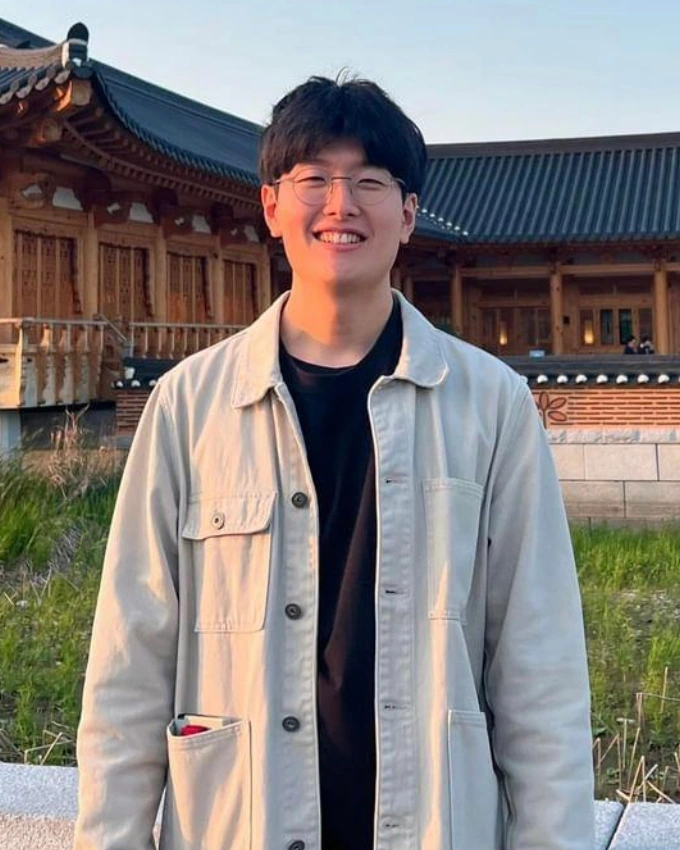
Jay Shin smiling in a brown sweater on an elevated walkway between brick buildings
  1. qualcomm/GenieX#1564C++ (opens in a new tab)
  2. qualcomm/GenieX#1577Python (opens in a new tab)
  3. llm-d/llm-d-router#3677Go (opens in a new tab)
  4. aws/sagemaker-hyperpod-cli#471Python (opens in a new tab)
4 merged pull requests · October 2026
  • 6+years shipping production software
  • 4merged contributions · Qualcomm, llm-d, AWS
  • 67%faster firmware response · 1,174 → 386 ms
  • 2,100+learners taught across 17 AI & software courses
  • Python
  • C++
  • Go
  • LLM inference
  • RAG
  • AI agents
  • LangChain
  • KV cache
  • IBM Db2
  • Apache AsterixDB
  • Linux
  • Docker
01

Experience

  1. Nov 2026 – PresentDBIS Lab, Santa Clara University

    Graduate Student Researcher

    • Databases for AIApache AsterixDB query processing & data management
  2. Mar 2024 – Mar 2026Hanwha Vision

    Senior Research Engineer

    • 1000s of camerasC++/Qt video management client for thousands of cameras and servers
    • 13.9% faster buildsPrecompiled-header optimization, benchmarked
    • 50-engineer teamRan Git branching, code reviews, and releases
    • AI video searchBuilt multi-server updates, camera controls, and AI search filters
  3. Jan 2020 – Feb 2024Hanwha Vision

    Research Engineer

    • 67% faster firmware response1,174 ms → 386 ms via parallel execution
    • LTE modem in 3 weeksIntegrated and hardware-tested for overseas markets
    • Decades-old codebaseMaintained a large embedded NVR C/C++ codebase
    • Docker cross-compilationAutomated SoC builds
02

Selected work

Award-recognized project

IBM Db2Hack 2026 · Nov 2026

Top 20 Finalist · Special Recognition

MetricGuard

AI answers you can verify.

  • Top 20IBM Db2Hack finalist
  • 17%revenue overcount caught
  • 173tests passed
MetricGuard · Trustworthy analytics

From AI-generated query to independent verification

  1. Build SQLDeterministic queries
  2. Query dataIBM Db2
  3. Verify resultsChecks & audits

17% revenue overcount demonstrated in test data.

Conceptual workflow · incorrect-join test case

Meta Muse Spark · LangChain · IBM Db2 — deterministic SQL, independent verification, audit trails.

  • Meta Muse Spark
  • LangChain
  • IBM Db2
  • Deterministic SQL
Explore the project
Read project details

Why it matters

Top 20 Finalist with Special Recognition at IBM Db2Hack 2026. Reproduced a 17% revenue overcount from faulty joins in test data, showing why business numbers need verification. The resume records 173 project tests passed.

The problem

An AI-generated analytics answer can look convincing while counting the same revenue more than once. MetricGuard addresses this risk when querying business data.

My contribution

I built verifiable AI analytics with Meta Muse Spark, LangChain, and IBM Db2, combining deterministic SQL with independent verification and audits. I reproduced a 17% revenue overcount from faulty joins; the project reported 173 tests passed.

Technical approach

Generate database queries through deterministic SQL, then independently verify and audit the analytics. The goal is to make an AI answer checkable instead of asking a person to trust a convincing explanation.

Scope

The 17% revenue overcount was demonstrated in test data with incorrect joins. It is a data-correctness finding, not measured revenue recovered or an accuracy guarantee.

Open Source Contributions

4 merged PRs
  1. Qualcomm GenieXMerged #1564

    Help AI models reserve only the memory they need

    • C++
    • llama.cpp
    Read the technical case study
    BeforeReserve for every input token

    Only the final output row was used.

    Merged changeReserve one row per sequence

    Keep the required output. Avoid the extra reservation.

    VLM path illustrated · text-model behavior preserved · no device memory measurement

    Outcome

    Removed unnecessary output-memory reservations for image-and-text AI models while preserving text-model behavior. The C++ change and regression tests were merged into Qualcomm GenieX; device memory savings remain unmeasured.

    Problem

    VLM contexts reserved output rows for every batch token even though the generation path consumed only the final logits row.

    Root cause

    The default context policy expanded output capacity to the batch size. VLM sampling and decision paths used only the last row; LLM callers could still request every position.

    My contribution

    I traced VLM output consumers and introduced a VLM-specific reservation policy, leaving the default LLM allocation behavior intact.

    Implementation

    Added an internal OutputReservation policy: VLM sets n_outputs_max to max(1, n_seq_max) and n_outputs_max_per_seq to 1. Added VLM and LLM regression cases.

    Why this approach

    Keep batch reservation as the default. Opt VLM contexts into LastPerSequence so the optimization respects the different output contracts.

    Verification

    PR-recorded local checks: 12 C++ harness checks, also with ASan/UBSan; formatting, syntax-only compilation and static checks passed. 51 Python tests collected; full SDK tests NOT RUN.

    Limitations

    About 593 MiB is a calculated saving for one reported model/configuration, not a Snapdragon measurement. No full SDK build or device benchmark was run. A future VLM path needing multiple rows must revisit this policy.

  2. Qualcomm GenieXMerged #1577

    Let an AI conversation continue after a cancelled reply

    • Python
    • Streaming
    Read the technical case study
    BeforeA cancelled reply could break the next turn
    1. Reply cancelled
    2. Displayed text ≠ saved history
    3. Next message fails
    Merged fixThe conversation can continue
    1. Reply cancelled
    2. Displayed text = saved history
    3. Next message succeeds
    Behavior illustrated from the recorded small CPU VLM regression · not a device benchmark

    Outcome

    Stream text matches final SDK output in the recorded CPU cancellation scenario, and the continued conversation succeeds.

    Problem

    A cancelled stream could deliver a token absent from the SDK's final output and KV state, breaking the next VLM conversation turn with prefix-reuse error -201202.

    Root cause

    TextIteratorStreamer queued a token before checking cancellation. The SDK rejected that token, so a conversation rebuilt from stream text no longer matched the cached prefix.

    My contribution

    I moved the cancellation check before enqueueing, kept accepted callbacks successful, and added model-free unit tests plus a CPU VLM regression.

    Implementation

    Changed the Python streamer callback ordering; added three callback-contract tests and a CPU integration case asserting streamed text equals GenerateOutput.text after cancellation.

    Why this approach

    After enqueueing, accept the token consistently. If cancellation races the callback after its check, stop at the next callback rather than leaving a delivered token outside SDK state.

    Verification

    PR-recorded local results: 57 Python unit tests passed. A SmolVLM-256M CPU reproduction failed before the fix and passed after it, including conversation continuation. Formatting and static checks passed.

    Limitations

    A racing cancellation may accept at most one extra token consistently. The full CI model matrix was not run locally; the recorded integration check used a small CPU VLM, not Snapdragon hardware.

  3. llm-d Router (CNCF)Merged #3677

    Keep reusable AI context connected across servers

    • Go
    • Distributed systems
    Read the technical case study
    BeforeReusable context lost its source at the handoff
    1. Cache source validated
    2. Encoder passes an empty source
    3. Next stage cannot request that cached context
    Merged fixThe next server receives the validated source
    1. Cache source validated
    2. Source preserved through the encoder
    3. Next stage can request cached context
    10 HTTP regression scenarios · existing safety gates preserved · real GPU transfer not measured

    Outcome

    The validated cache source now reaches the next processing stage instead of being replaced with an empty value. The fix and 10 HTTP regression scenarios were merged upstream; no GPU throughput or latency improvement is claimed.

    Problem

    Preserve a validated peer-to-peer KV-cache source across the encoder-to-prefill handoff so the next stage can request a cached prefix.

    Root cause

    Dispatch consumed and validated the cache-routing header, but the encoder-to-prefill/decode handoff always supplied an empty source. That discarded information needed to request the cached prefix.

    My contribution

    I carried the validated cache source through the Go request context and encoder handoff, added 10 HTTP encode/prefill/decode regression scenarios, and updated the disaggregation documentation.

    Implementation

    Updated Go dispatch and encoder connector interfaces to propagate the validated source. Added real HTTP encode-to-prefill-to-decode tests for ec-nixl and ec-example, including enabled, disabled, self-source, malformed, and disallowed cases. Updated the disaggregation guide.

    Why this approach

    Carry the validated source in the request context and reuse the existing connector injection. Preserve the current validation, allowlist, feature-flag, and self-source gates.

    Verification

    The PR records that enabled cases failed before the fix and all 10 new HTTP scenarios passed afterward. Focused and full proxy race-test suites passed, along with go vet, formatting, and repository presubmit checks in the Linux/arm64 builder. These upstream checks were not rerun as part of this portfolio update.

    Limitations

    Tests validate sidecar HTTP orchestration using test backends. A real GPU KV-cache transfer and model-serving performance benchmark were not run; these results establish routing behavior rather than a measured speedup.

  4. AWS SageMaker HyperPod CLIMerged #471

    Make a cloud CLI say exactly what it does

    • Python
    • AWS CloudFormation
    Read the technical case study
    BeforeThe output promised a filter that did not exist
    $ hyp list cluster-stack
    📋 HyperPod Cluster Stacks (2 found)
    help: "List all HyperPod cluster stacks."

    Every CloudFormation stack was listed, HyperPod or not.

    Merged fixHelp, output and docs match the real behavior
    $ hyp list cluster-stack
    📋 CloudFormation Stacks (2 found)
    help: "List CloudFormation stacks in the current AWS account and Region."

    Regression tests keep help and output aligned.

    Output quoted from the merged PR description · behavior unchanged by design

    Outcome

    The CLI, SDK, and documentation now agree with what the command returns, and new tests protect that agreement. Reviewed, approved by two maintainers, and merged into AWS's main branch.

    Problem

    The CLI help, output header, and documentation promised HyperPod-only results, while the command and SDK returned every CloudFormation stack in the account and Region (issue #348). One help example also used an invalid command.

    Root cause

    The command calls CloudFormation ListStacks for the account and Region without a HyperPod filter. The help text, the 'HyperPod Cluster Stacks' header, and the docs were written as if a filter existed. A help example also referenced `hyp list hyp-cluster`, which is not a valid command.

    My contribution

    I traced the CLI and SDK listing path, corrected every user-facing description across 8 files, and added regression tests that check the help text and the output agree with the real behavior.

    Implementation

    Updated CLI help and usage examples, the SDK docstring, the output header ('CloudFormation Stacks'), the README, the Read the Docs page, and two example notebooks. Added tests asserting that unrelated stacks are returned and displayed and that help text no longer claims HyperPod-only results.

    Why this approach

    Apply the minimal fix suggested in the issue. Tag filtering was rejected because ListStacks does not return tags and Console-created or legacy stacks may be untagged; name-prefix filtering would miss valid HyperPod stacks and silently change existing behavior.

    Verification

    PR-recorded: tox unit suite on Python 3.11 — 1,249 passed with 80.11% coverage; 64 targeted CLI and SDK tests passed. A mocked CLI call confirmed region and status filters still reach CloudFormation. Diff, notebook JSON, and scoped secret scans passed.

    Limitations

    Integration tests (real AWS resources), the Sphinx documentation build, and Python 3.8–3.10 unit runs were not run locally. Listing behavior is intentionally unchanged; a HyperPod-only filter would be a separate feature.

Production engineering

Hanwha Vision

Video management at scale

Case study
Read the technical case study
Production software · Hanwha Vision

From camera network to operator

  1. Devices & serversThousands of connections
  2. C++ componentsState, updates & events
  3. Operator interfaceQt 6 / QML controls

A connected view of a large camera network.

Conceptual illustration · company architecture is private

Outcome

Video management components for thousands of camera and server connections. Operators can manage device updates across servers, control cameras, and use AI video-search filters, with more consistent device state.

Problem

Build a multi-server video management system supporting thousands of camera and server connections, while continuing to deliver features for operators.

Root cause

Multi-server device management and feature delivery required clear component boundaries. The resume describes architecture and state-consistency work; it does not disclose a single incident's internal root cause.

My contribution

I developed modular C++/Qt 6/QML components for a multi-server video management system supporting thousands of camera and server connections, and improved REST-backed device-state consistency. I implemented client-side multi-server device updates, camera controls, and AI video-search filters.

Implementation

Developed modular components for the multi-server video management system and improved REST-backed device-state consistency. Implemented client-side multi-server device updates, camera controls, and AI video-search filters.

Why this approach

Use modular C++ application components with Qt 6/QML presentation to organize device management, updates, and event controls.

Verification

The resume records a production platform supporting thousands of camera and server connections. Company test results and source code are not public; this portfolio does not independently reproduce that scale.

Limitations

This is professional experience rather than a public repository. The diagram is conceptual; proprietary topology, code, and internal test artifacts are not disclosed.

Reproducible embedded builds

Case study
Read the technical case study
Developer infrastructure · Hanwha Vision

Automated, repeatable environments.

  1. Shared sourceOne starting point
  2. Docker toolchainsIsolated dependencies
  3. Embedded targetsTarget-specific builds

Engineers build without repeating manual setup.

Conceptual workflow · proprietary toolchains are not shown

Outcome

Automated toolchain setup across embedded processor targets, giving engineers a repeatable starting point for development.

Problem

Support builds across multiple embedded SoC platforms without manual toolchain setup slowing every engineer down.

Root cause

Each embedded SoC target needed its own compiler and dependencies. Repeated manual setup made cross-compilation preparation an ongoing engineering task.

My contribution

I automated embedded SoC toolchain setup with Docker, giving engineers a consistent build environment across targets.

Implementation

Automated embedded SoC toolchain setup with Docker, replacing repeated manual toolchain configuration.

Why this approach

Encapsulate target-specific toolchains in Docker so developers can repeat the same preparation workflow.

Verification

The resume records the implemented Docker workflow. Internal build logs and target-matrix results are unavailable publicly; no setup-time percentage or broader performance claim is added.

Limitations

Company code and toolchains are private. The diagram illustrates the general workflow and does not reproduce a proprietary build system.

03

Teaching

Technical Instructor & Course Creator

  • 17hands-on AI & software courses created
  • 2,100+learners reached
  • 4.7/5average course rating
04

Skills

Languages
  • Python
  • C++
  • C
  • Go
  • SQL
  • JavaScript
AI & ML
  • Machine Learning
  • LLM Inference
  • RAG
  • AI Agents
  • LangChain
  • KV Cache
Backend & Data
  • FastAPI
  • REST APIs
  • IBM Db2
Systems & Tools
  • Linux
  • Docker
  • Qt/QML
  • Embedded Systems
  • Git/GitHub Actions
  • CI/CD
Core CS
  • Data Structures & Algorithms
  • Object-Oriented Design
  • M.S. in Artificial IntelligenceSanta Clara University
    Expected June 2028
  • B.S. in Computer EngineeringHongik University · Major GPA 4.09/4.50 · Overall 3.85/4.50 · 4 semesters of merit scholarships
    February 2020

Available for Summer 2027 internships

Let's build something
that holds up.

jshin4@scu.eduActual screenshot of Jay's interactive rooftop outpost, with systems, Linux, AI and open-source engineering spaces Enter the 3D engineering outpost